Could the path to calm be in the palms of your hand?
Hey — I’m glad you’re here. Take a breath.
You don’t need to fix anything — just notice.
which of these feels most like you right now?
❄️“I feel stuck or frozen”
😬“I feel on edge or overwhelmed”
🔌“I feel disconnected from my body”
🏚“I feel like my inner house is collapsing”
🔁“My mind is racing or caught in loops”
Take a moment to notice which resonates with you —
If you recognized yourself in any of those statements, you’re not alone.

You're Not Alone.
Over 40 million Americans struggle with anxiety each year, and 1 in 5 adults face depression. While medication and therapy can help, many still feel stuck searching for deeper relief.
Part of the challenge is that our systems weren’t built for healing.
- Schools train us what to think, not how to manage emotions.
- Healthcare often manages symptoms, but doesn’t always resolve the root.
That leaves millions feeling disconnected, even after following the “right” path.
Many people try to think their way out of these states — and get frustrated when it doesn’t work.
What’s often overlooked is that these patterns live in the nervous system, not just the mind.
I realized there had to be a practical way to help the nervous system respond differently — not just the mind.
That realization is what led to Toss-Catch-Heal.

Holistic tools to support mood and stress naturally.
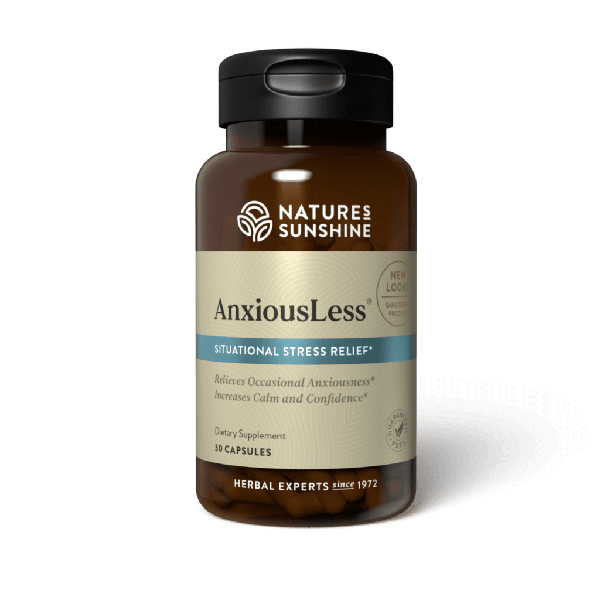

“Even with medication, the weight may still be there.”
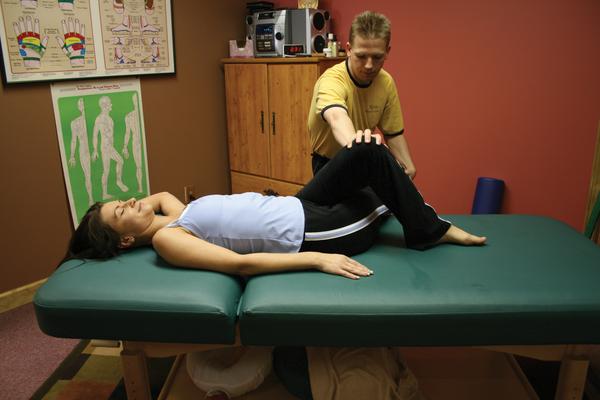
- Massage Therapy
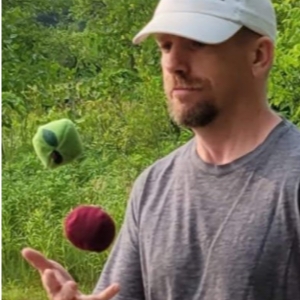
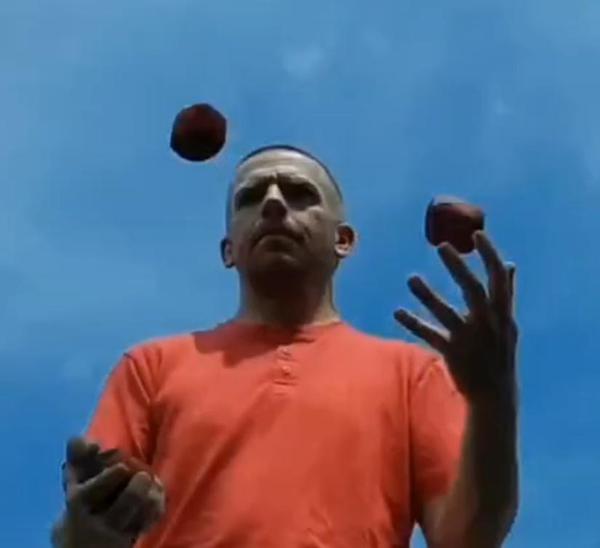
- Juggling Therapy

- Meditation/Yoga
Toss-Catch-Heal bridges that gap — using movement, rhythm, and focus to calm the nervous system, retrain attention, and process emotions.
🍎 Grounded in neuroscience:
🍏 Neuroplasticity – rewiring the brain for lasting change
🍎 Bilateral stimulation – the foundation of trauma therapies like EMDR
🍏 Flow state – entering calm, focused absorption where healing happens
🍎 It’s not about replacing what works. It’s about restoring what’s missing.
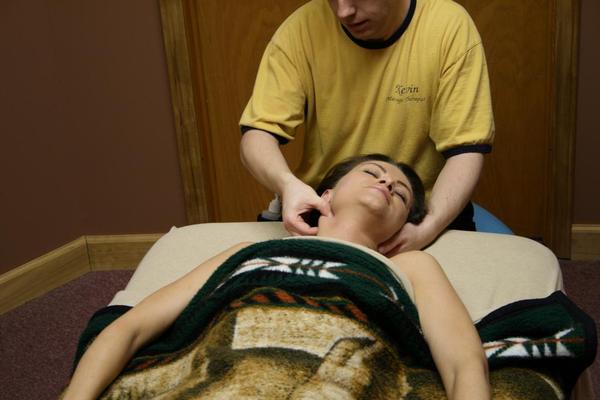
Science explains how it works, but experience shows why. Here’s how it began…
My path into healing began as a massage therapist. Even then, I sensed juggling held more than entertainment value—it seemed to touch the nervous system in subtle but powerful ways.
But life shifted. Running a massage office became overwhelming—licensing, rent, and the pressure to conform to a homogenized model of healing left me drained. I loved the work, but it felt like the walls were closing in. Closing my doors felt like the only option, though I didn’t yet know it would lead me into a much deeper transformation.
What followed was nearly a decade of stepping back. I thought I was simply regrouping, but in truth, I had entered my own chrysalis. During those years, I faced profound loss—my sister, my parents, and eventually the home I had lived in for more than 20 years. Piece by piece, life stripped me down. Yet in that hibernation, something unseen was taking shape.
When juggling returned, it wasn’t just a hobby or fun career—it was a lifeline. Each toss slowed my breath. Each catch softened my thoughts. The rhythm gave me a way to hold emotions too heavy to name. And when I began sharing it with others—even through a phone camera—it worked for them too.
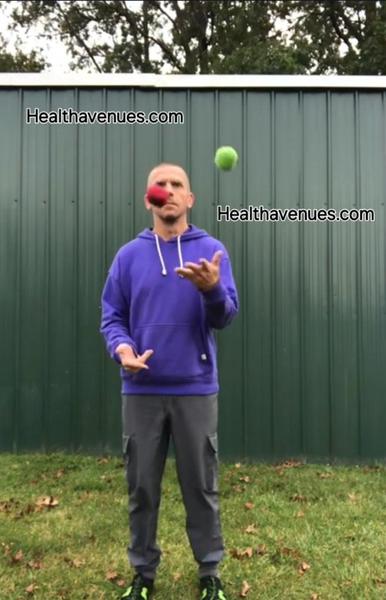
That is how Toss-Catch-Heal emerged: not as a circus act, not as a clinic protocol, but as the butterfly that grew out of hidden years of transformation. A way to heal anxious minds, including my own—in mid-air.
“Before it had a name, it was just movement with meaning.”
Even before massage school, I’d noticed something intriguing about juggling. Online articles and anecdotal stories from jugglers hinted that it wasn’t just entertainment — it was changing the way people felt and moved. I felt it myself. Only later, when I dug into formal research, did I see that juggling actually reshapes brain connectivity. That was the lightbulb moment: what had felt like play was actually engaging the nervous system in profound ways. Years after that, I discovered clinical methods like EMDR use similar bilateral stimulation — but long before I knew those names, Toss‑Catch‑Heal was already putting these principles into motion.